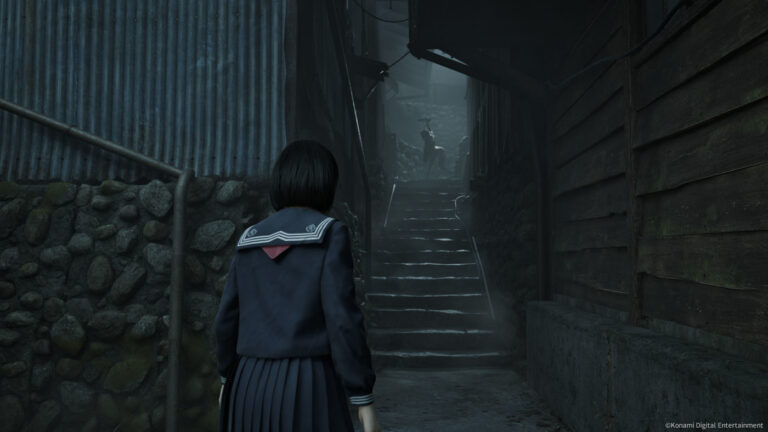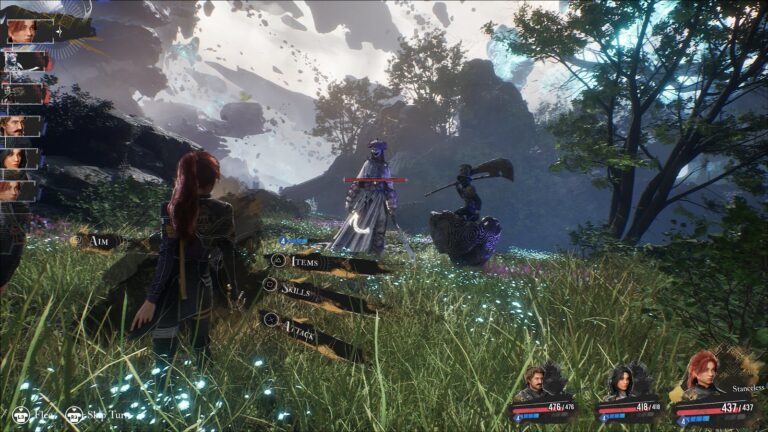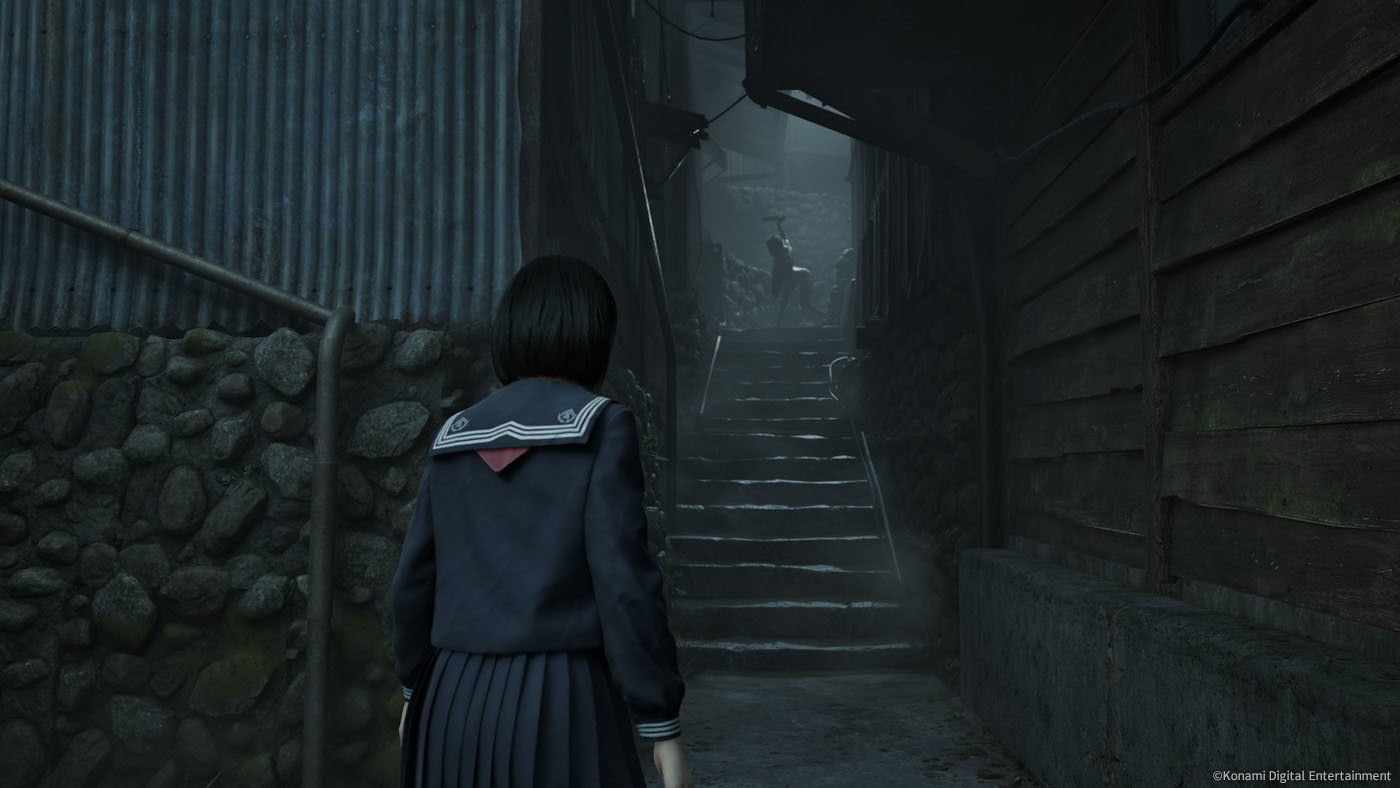

Silent Hill f is a part of a new generation for the legendary horror franchise, one that sees the ethereal and eerie titular setting extending its horrific manifestations into different places around the world. This title was an opportunity for us at NeoBards to harness what makes Silent Hill the psychological horror staple it is and shape a fresh new experience that brings the terror in both familiar and new ways.
I’m Al Yang, studio creative director at NeoBards and game director for Silent Hill f. I’m excited to share a slice of my Game Developers Conference (GDC) Festival of Gaming session for the PlayStation community, giving you all a behind-the-scenes look into the systems behind the first melee-only Silent Hill title.
Creating a different Silent Hill
In Silent Hill f, the secluded town of Ebisugaoka is consumed by a sudden fog in 1960s Japan, transforming lead character Shimizu Hinako’s home into a haunting nightmare. We initially spent some time considering what types of weapons we wanted to use from Showa-era Japan, doing some prototyping work along the way. With many horror games that emphasize action, there’s gunplay and other ranged combat in the majority of them. What if we flip the script here? It isn’t something horror players are entirely unfamiliar with, but not quite to the extent we’re proposing.
When players say they want to play a horror game and that they want to be scared, I think what they really mean is they want to feel tense. Jump scares are scary, but if you’re giving nonstop jump scares, players become numb, and it detracts from the atmosphere. The real fear lives in the anticipation and build-up, which became a guiding philosophy for how we built story and combat in Silent Hill f.
Injecting tension into combat
There’s intentional design that yields crucial tension for the typical survival horror experience. Slower rhythms with things like aiming and reloading, resource management and scarcity, and pacing. How do we translate these things into our game?
There is a lot of data across the history of survival horror on how to create tension despite the power of guns. For example, let’s look at resources when you encounter a monster in your path. Having 4 bullets in this situation creates a very different feeling from seeing that creature and having 100 bullets. The player’s fear and approach change entirely.

There are no bullets in Silent Hill f, so we showcase resource management with weapons breaking. Every time you hit a monster, you see the durability bar go down. But you don’t know exactly how much damage you’re doing. It isn’t like an RPG where you see numbers or a bar above the enemy’s head. Having concrete values shown significantly decreases the tension, as a large part of the tension of horror games relies on giving the player incomplete information.
How enemies behave is key as well. With guns, monsters will take shots to different body parts and keep shambling unless you hit them in the head or another critical spot, causing them to react differently. We deliver this with the Focus system. With patience and the right timing, you can do a counter or focus attack. It is like aiming down the sights with a gun, so you can hit those vulnerable spots.
If you get in a really meaty hit, you’ll see it in how the creature reacts. You’re not quite sure how close you are to defeating the enemy, but you know that your attacks are having an effect.

A delicate, horrific balancing act
Just as important as building tension, it is important to have a period of release. A way to impact pace and inject those moments of tension release in combat is something we call a master key. It is a system breaker, entirely subverting the gameplay rhythm the player has been engaging with thus far.
Many combat systems can be distilled down to a rock, paper, scissors design, where certain weapons work better against certain monsters. That rhythm builds tension and, to release it, we have the master key. In a horror game with ranged combat, a master key could be a grenade or rocket launcher—a weapon or item that doesn’t care about balanced design and just damages your enemy no matter what. You don’t have to think; you turn your brain off and get this thing out of your way. Players are diverse and are challenged by different situations, so it’s important to have systems where they can choose when they want to break out on their own terms.
In Silent Hill f, that is the fox arm, which is a part of Hinako’s transformation throughout the game. The focus hit system I mentioned before is also a much lighter sample of that master key experience.

Thanks from NeoBards
GDC is a major knowledge-sharing hub where developers and other industry professionals share insights into the many different things that bring your favorite games to life, and I appreciate this opportunity to give some insight into how the NeoBards team crafted a new survival horror title while respecting and engaging with the long history of horror gaming that has come before us. For those who have played or those who have yet to play, I hope you enjoyed getting some new insight into this game that we’re very proud of.
Silent Hill f is available now on PlayStation 5.
Go to Source
Author: Al Yang